
Geschätzte Lesezeit: ca. 14 Minuten
“Lohnt sich der Einsatz von KI im Kryptowährungshandel?” Diese Frage gehört zu den häufigsten Fragen von Händlern im Jahr 2026 – und verdient eine ehrliche Antwort statt einer Verkaufsmasche. Die ehrliche Antwort lautet: Es hängt ganz von Ihren Erwartungen, Ihrem Wissen und Ihrer Anwendung ab. Dieser Artikel bietet einen ausgewogenen Überblick über die Vorteile, die tatsächlichen Kosten und wer von automatisierten Tools profitiert.
Zunächst realistische Erwartungen setzen
Bevor man Vor- und Nachteile abwägt, ist es hilfreich, die Erwartungen anzupassen. KI ist keine Gelddruckmaschine und beseitigt keine Risiken (es hilft, zu verstehen, dass...). wie diese Systeme im Detail funktionierenIm besten Fall ist es ein Werkzeug, das disziplinierten, informierten Händlern helfen kann, einen Plan konsequenter umzusetzen. Im schlimmsten Fall vermittelt es übermütigen Nutzern ein falsches Sicherheitsgefühl. Der Wert von KI hängt weit mehr vom Nutzer als vom Algorithmus ab.
Die echten Vorteile von KI im Handel
Bei sinnvoller Anwendung bieten KI-Tools echte Vorteile. Sie eliminieren emotionale Entscheidungen, die für viele Handelsverluste verantwortlich sind. Sie arbeiten kontinuierlich auf Märkten, die nie schließen. Sie können weitaus mehr Daten verarbeiten als ein Mensch und Regeln mit absoluter Konsistenz anwenden. Zudem ermöglichen sie systematisches Backtesting von Ideen, bevor echtes Geld riskiert wird. Für Trader mit einer soliden Strategie und einem bewährten Risikomanagement sind diese Effizienzgewinne von großer Bedeutung.
Die ehrlichen Nachteile und versteckten Kosten
Die Nachteile sind genauso real. KI-Modelle können versagen, wenn sich Märkte unerwartet verhalten, und sie können eine fehlerhafte Strategie fehlerfrei umsetzen – Verluste genauso effizient automatisieren wie Gewinne. Es gibt auch direkte Kosten: Abonnements, Performancegebühren und Spreads, die die Rendite schmälern. Hinzu kommen technische Risiken wie Ausfälle, Bugs und API-Fehler. Und dann sind da noch die subtileren Kosten übermäßiger Abhängigkeit: dem System zu vertrauen, das man nicht vollständig versteht, und die eigene Lernfähigkeit zu vernachlässigen. All diese Kosten werden auf einer Hochglanzbroschüre nicht erwähnt.
KI-gestützter Handel vs. manueller Handel – Ein fairer Vergleich
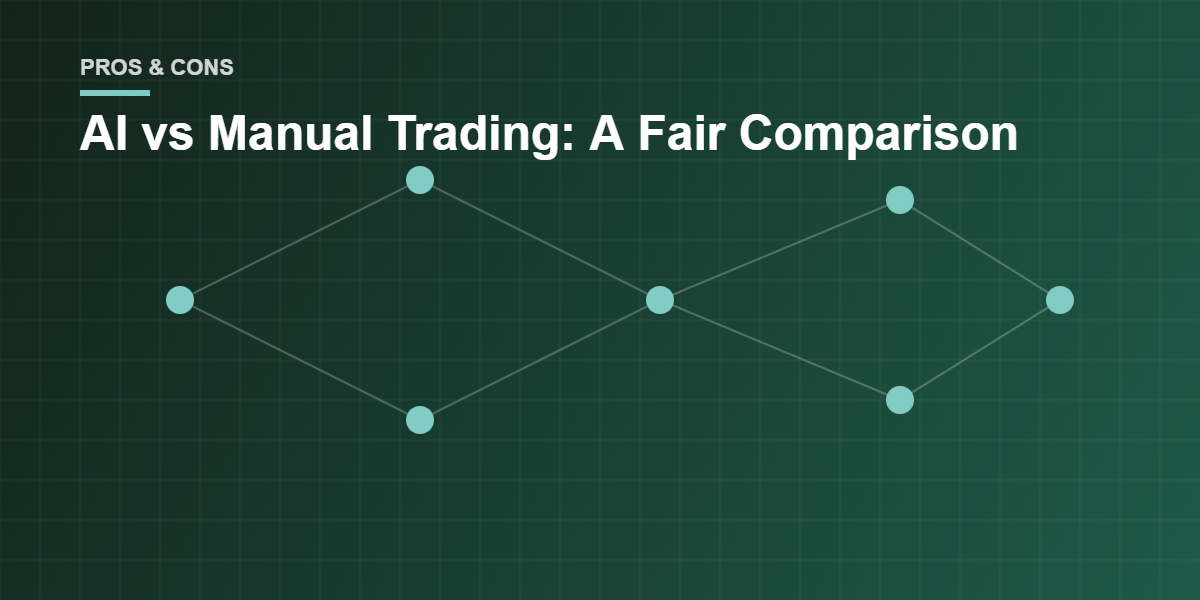
Manuelles Trading bietet Urteilsvermögen, Anpassungsfähigkeit und Intuition, die der aktuellen KI fehlen, ist aber langsam, emotional und unbeständig. KI bietet Geschwindigkeit, Disziplin und Skalierbarkeit, aber es mangelt ihr an echtem Verständnis und sie reagiert schlecht auf unvorhergesehene Ereignisse. Keine der beiden Methoden ist grundsätzlich “besser”. In der Praxis nutzen viele erfahrene Trader KI für die Ausführung und Überwachung, behalten aber die menschliche Kontrolle über Strategie und Urteilsvermögen bei. Das Risiko liegt nicht in der Wahl einer Methode, sondern im vollständigen Verzicht auf Kontrolle.
Wer profitiert am meisten (und wer sollte vorsichtig sein)
Am meisten profitieren in der Regel erfahrene Trader mit einer bewährten Strategie, einem klaren Risikomanagement und der Disziplin, ihre Tools zu überwachen. KI verstärkt bestehende Vorteile; sie schafft selten neue. Besonders vorsichtig sollten absolute Anfänger, alle, die ein garantiertes Einkommen anstreben, und alle sein, die in Versuchung geraten, Geld zu investieren, dessen Verlust sie sich nicht leisten können. Für diese Gruppen können KI-Tools Fehler eher verstärken als verhindern.
Häufige Fehler bei der Verwendung von KI-Tools
Die häufigsten Fehler sind vorhersehbar: beeindruckende Backtests zu vertrauen, ohne Overfitting zu verstehen; Hebelwirkung zu nutzen, ohne die damit verbundenen Risiken zu begreifen; zu viel Geld zu früh einzuzahlen; Systeme völlig unbeaufsichtigt zu lassen; und Marketingversprechen garantierter Renditen zu glauben. Jeder dieser Fehler verwandelt ein potenziell nützliches Werkzeug in eine Quelle vermeidbarer Verluste. Das Bewusstsein für diese Fehler ist der erste Schutz.
Eine sinnvolle Methode zum Testen von KI-Tools ohne Überforderung
Wenn Sie sich für den KI-gestützten Handel entscheiden, gehen Sie dabei vorsichtig vor. Beginnen Sie mit der Recherche zu den Regulierungs-, Verwahrungs- und Auszahlungsbedingungen des Anbieters – unsere Checkliste zur Plattformbewertung Er erklärt genau, was zu überprüfen ist. Beginnen Sie mit dem kleinstmöglichen Betrag, dessen Verlust Sie sich leisten können. Überwachen Sie die Performance aktiv und vergleichen Sie sie mit realistischen Benchmarks, nicht mit Marketingangaben, und lesen Sie unabhängige Hintergrundinformationen wie z. B. dieser Überblick über den automatisierten Handel. Lernen Sie kontinuierlich dazu, um die Funktionsweise des Tools zu verstehen, und seien Sie bereit, die Nutzung abzubrechen, falls Ergebnisse, Gebühren oder Auszahlungen Anlass zu Bedenken geben. Betrachten Sie das Experiment in erster Linie als Lernprozess und erst in zweiter Linie als Gewinnmaximierung.
Häufig gestellte Fragen
Lohnt sich KI für Krypto-Trading-Anfänger?
Für die meisten Anfänger sollte der Schwerpunkt zunächst auf dem Erlernen der Grundlagen und dem Risikomanagement liegen. KI-Tools können vorsichtig und in kleinem Umfang erkundet werden, sie ersetzen jedoch kein Verständnis.
Kann mir KI-gestützter Handel dauerhafte Gewinne ermöglichen?
Kein Tool kann dauerhafte Gewinne garantieren. KI kann zwar bei der Umsetzung einer Strategie helfen, doch Märkte sind unsicher und Verluste sind immer möglich. Seien Sie skeptisch gegenüber jeglichen Garantien für Beständigkeit oder Gewinn.
Welche versteckten Kosten bergen KI-gestützte Handelstools?
Abonnements, Performancegebühren, Spreads und das Risiko automatisierter Verluste summieren sich. Die Kosten einer zu starken Abhängigkeit – also eines mangelnden Verständnisses der eigenen Strategie – können jedoch die teuersten sein.
Ist KI sicherer als manueller Handel?
Es ist nicht grundsätzlich sicherer. KI eliminiert zwar Emotionen, birgt aber technische und Kontrahentenrisiken und wird einen fehlerhaften Plan automatisch umsetzen. Das zugrunde liegende Marktrisiko bleibt in jedem Fall bestehen.
Wie viel sollte ich investieren, um KI-Trading auszuprobieren?
Nur einen Betrag, dessen Verlust Sie sich leisten können. Mit einem kleinen Betrag können Sie das Verhalten des Tools, die Gebühren und den Auszahlungsprozess testen, bevor Sie mehr investieren.
Sollte ich mich ausschließlich auf ein einziges KI-Tool verlassen?
Sich ausschließlich auf ein einziges, undurchsichtiges Werkzeug zu verlassen, ist riskant. Behalten Sie die Kontrolle, diversifizieren Sie Ihren Ansatz und lernen Sie kontinuierlich dazu, anstatt die vollständige Kontrolle abzugeben.
Woran erkenne ich, ob eine KI-Plattform vertrauenswürdig ist?
Prüfen Sie die Regulierung und Lizenzierung, die Transparenz, die Sicherheit der Gelder, die Gebühren und die Auszahlungsbedingungen und suchen Sie nach unabhängigen, überprüfbaren Informationen anstatt nach beworbenen Ergebnissen.
Zusammenfassung
Lohnt sich der Einsatz von KI im Kryptowährungshandel? Unter Umständen ja – für den richtigen Anwender und bei richtiger Anwendung. Erfahrene, disziplinierte Trader mit einer bewährten Strategie und einem soliden Risikomanagement können durch KI-Tools mehr Effizienz und Kontinuität erzielen. Wer hingegen auf garantierte Gewinne aus ist oder die Fundamentaldaten außer Acht lässt, riskiert, Verluste zu verstärken. Entscheidend ist nicht die Technologie, sondern das Wissen, die Erwartungen und die Disziplin des Nutzers. KI sollte als Hilfsmittel für einen soliden Handelsprozess dienen – niemals als Ersatz dafür.
Weiterführende Literatur
- Wie KI im Kryptohandel im Jahr 2026 funktioniert: Ein klarer Leitfaden
- CryptifyAutoX Testbericht 2026: Eine ehrliche und vorsichtige Analyse
Für eine unvoreingenommene Darstellung der Vor- und Nachteile des automatisierten Handels siehe beispielsweise folgende Quellen: Investopedia über automatisierte Handelssysteme. Um zu überprüfen, ob ein Anbieter eine Lizenz besitzt, konsultieren Sie offizielle Aufsichtsbehörden wie die [Name der Behörde einfügen]. US SEC, Die UK FCA, oder die EU ESMA.
Haftungsausschluss: Dieser Artikel dient ausschließlich Bildungs- und Informationszwecken und stellt keine Finanz-, Anlage- oder Handelsberatung dar. Der Handel mit Kryptowährungen birgt erhebliche Risiken, bis hin zum möglichen Totalverlust Ihres Anlagekapitals. Kein Tool, keine Strategie und keine Plattform kann Gewinne garantieren, und vergangene oder beworbene Wertentwicklungen sind keine Garantie für zukünftige Ergebnisse. Führen Sie stets Ihre eigenen Recherchen durch und ziehen Sie gegebenenfalls einen unabhängigen, zugelassenen Finanzberater zu Rate, bevor Sie finanzielle Entscheidungen treffen.

 English
  German
  Polish
  French
  German (Switzerland)
  Croatian
  Czech
Czech  Italian
  Spanish
  Swedish
  Portuguese (Portugal)
  Portuguese (Brazil)
  Japanese
  Thai
Thai  Danish