
Forventet læsetid: ~14 minutter
Kunstig intelligens er blevet et velkendt begreb på råvaremarkeder, fra energi og metaller til landbrugsprodukter. Men der er et stort gab mellem, hvad AI-råvarehandel faktisk gør, og hvad mange mennesker forestiller sig, at den gør. Denne guide forklarer i et letforståeligt sprog, hvordan AI fungerer i råvarehandel i 2026 – den virkelige mekanisme, de ærlige begrænsninger og de risici, som enhver trader bør forstå, før de stoler på en algoritme.
Hvad "AI-råvarehandel" egentlig betyder
Når folk hører "AI-handel", forestiller de sig ofte software, der forudsiger fremtiden. I virkeligheden er AI inden for råvarehandel et sæt statistiske og maskinlæringsteknikker, der registrerer mønstre i historiske og live data og derefter handler ud fra sandsynligheder. Den ved ikke, hvad olie, guld eller hvede vil gøre i morgen, og den kan ikke fjerne usikkerhed. En mere præcis beskrivelse er, at AI er en hurtig, utrættelig mønstermatcher, der følger regler - nogle skrevet af mennesker, nogle lært af data.
Denne sondring har enorm betydning inden for råvarer, hvor priserne formes af vejr, geopolitik, lageromkostninger og udbudschok, som ingen model fuldt ud kan forudse. At behandle en sandsynlighedsmotor som en krystalkugle er den mest almindelige og dyreste fejltagelse inden for automatiseret handel.
Byggestenene i AI i råvarehandel
Maskinlæringsmodeller
Kernen i de fleste systemer er maskinlæringsmodeller, der er trænet på historiske prisdata, futureskurver og andre signaler. Almindelige tilgange omfatter overvåget læring til at estimere sandsynligheden for prisbevægelser, forstærkningslæringsagenter, der lærer en handelspolitik i simulering, og tidsseriemodeller bygget til sekventielle data. Hver af dem har afvejninger i nøjagtighed, stabilitet og hvor slemt den bryder sammen, når markedsforholdene ændrer sig.
Datainput: Udbud, efterspørgsel, vejr og geopolitik
Råvarer er usædvanligt rige på data. Ud over pris og volumen kan modeller inddrage lager- og lagringsrapporter, afgrøde- og høstdata, vejrudsigter, forsendelses- og fragtrater, energiproduktionstal og geopolitiske nyheder. Kvaliteten, aktualiteten og renheden af disse data bestemmer direkte, hvor nyttig modellens output er. På råvaremarkeder kan en enkelt vejrbegivenhed eller et eksportforbud tilsidesætte måneders historiske mønstre.
Stemnings- og alternative data
Mange moderne systemer bruger naturligt sprog til at måle stemningen ud fra nyheder og rapporter, og nogle bruger alternative data såsom satellitbilleder af afgrøder, lagertanke eller skibsaktivitet. Disse kan være værdifulde, men de er støjende og til tider tvetydige. De behandles bedst som understøttende kontekst snarere end enkeltstående handelsudløsere.
Hvordan en AI-handelsbeslutning træffes
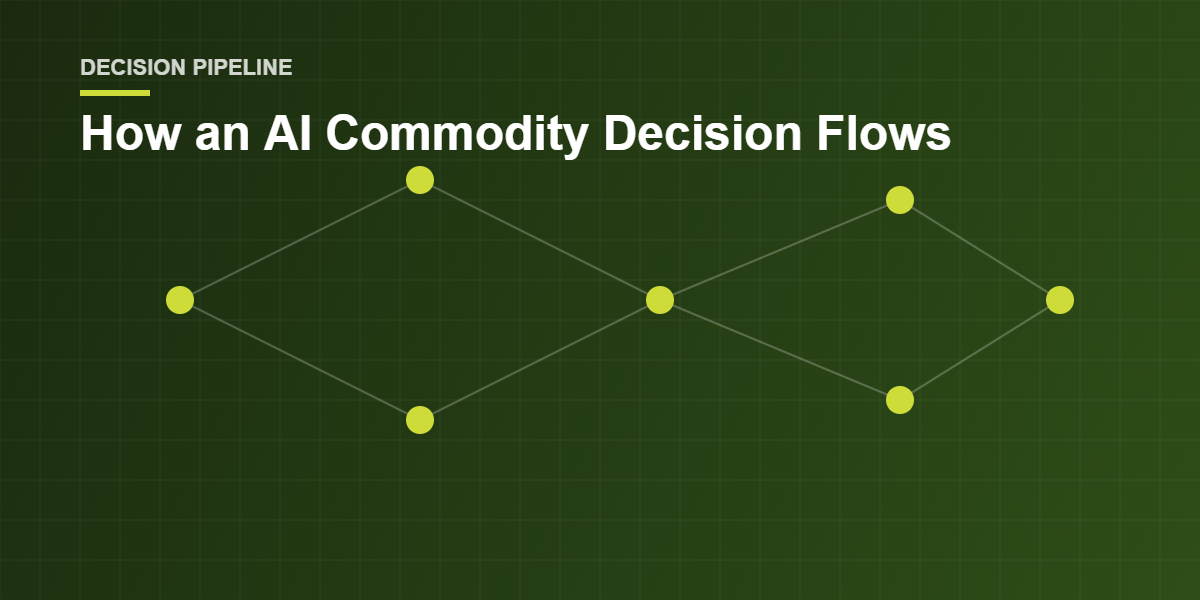
Kort sagt følger en beslutning normalt en kæde: indsamling og rensning af indgående data; omdannelse af dem til funktioner, som modellen forstår; indførsel af disse funktioner i den trænede model for at producere en sandsynlighed eller score; send denne score gennem risikoregler, der bestemmer positionsstørrelse og om der overhovedet skal handles; og send derefter en ordre til markedet. Modellen er ét led i kæden. Risikolaget, der omslutter den, adskiller ofte et bæredygtigt system fra et skadeligt.
Automatiseret futuresudførelse
Backtesting og dens fælder
Før strategier går live, backtestes de mod historiske data. Backtesting er afgørende, men det er også her, de fleste strategier ser langt bedre ud, end de senere præsterer. Overfitting – at justere en model så tæt på tidligere data, at den opfanger støj i stedet for signal – producerer smukke historiske kurver og skuffende liveresultater. At ignorere gebyrer, slippage og roll-omkostninger på futures puster backtests yderligere op.
Glidning, likviditet og kontraktruller
I live-markeder er den pris, du ser, ikke altid den pris, du får. Slippage, latenstid, delvise udfyldninger og lav likviditet i nogle kontrakter undergraver alle den teoretiske performance. Råvarefutures kræver også rullende positioner mellem kontraktmåneder, hvilket har sine egne omkostninger. Et realistisk system tager højde for disse friktioner fra starten i stedet for at opdage dem efter implementering.
Hvad AI er godt – og hvad den ikke kan
AI er virkelig stærk til at behandle store mængder data hurtigt, håndhæve disciplin uden følelser, overvåge mange markeder på én gang og udføre en defineret plan konsekvent. Inden for råvarer kan det også hjælpe med at integrere forskellige datakilder, hvilket ville overvælde en menneskelig analytiker.
Hvad AI ikke kan gøre, er lige så vigtigt: den kan ikke forudse virkelig hidtil usete begivenheder, den kan ikke garantere profit – hvilket er grunden til om AI er værd at bruge afhænger så meget af brugeren, og den kan ikke øjeblikkeligt tilpasse sig et markedsregime, den aldrig har set før. Et pludseligt eksportforbud, et raffinaderiudfald eller en ekstrem vejrsæson kan ugyldiggøre en model, der er trænet på en roligere historie. Ingen ærlig udbyder påstår andet.
De reelle risici, som enhver bruger bør forstå
Flere risici fortjener særlig opmærksomhed. Overfitting får en strategi til at se pålidelig ud, indtil de faktiske forhold afviger fra træningsdataene. Black-box opacitet betyder, at nogle modeller ikke kan forklare, hvorfor de handler, hvilket gør det vanskeligt at diagnosticere fejl. Regimeskift og råvarespecifikke chok kan ugyldiggøre en model natten over. Problemer med datakvaliteten stille korrupte beslutninger. Og overafhængighed — at stole på et system, man ikke forstår, og lade det være uovervåget — forvandler et værktøj til en belastning. Gearing, som er almindelig i futures, forstærker alle disse risici.
Sådan bruger du AI-værktøjer ansvarligt
Ansvarlig brug starter med risikostyring, ikke med algoritmen. Beslut på forhånd, hvor meget du er villig til at tabe, brug positionsstørrelses- og stopregler, og ansæt aldrig penge, du ikke har råd til at tabe. Start småt, overvåg aktivt, og behandl ethvert AI-værktøj som en assistent snarere end en autopilot. Forstå gebyrerne, udbetalingsbetingelserne og hvem der opbevarer dine midler. Hvis du er usikker på, om en udbyder har licens, kan du tjekke officielle registre som f.eks. CFTC eller FCA. Hvis en platforms strategi er fuldstændig uigennemsigtig, eller dens resultater lyder for gode til at være sande, så betragt det som en grund til forsigtighed snarere end begejstring.
Ofte stillede spørgsmål
Kan AI forudsige råvarepriser præcist?
Intet værktøj kan forudsige priser pålideligt. AI arbejder med sandsynligheder baseret på tidligere mønstre, og råvaremarkeder er særligt tilbøjelige til pludselige chok, der bryder disse mønstre. Behandl enhver påstand om nøjagtig forudsigelse med stærk skepsis.
Er AI-råvarehandel egnet til begyndere?
Begyndere kan bruge AI-værktøjer, men de bør først forstå råvarer, futures, gearing og risikostyring. Det er risikabelt at stole på et system, man ikke forstår, uanset hvor avanceret det ser ud.
Garanterer AI-handel profit?
Nej. Ethvert værktøj eller enhver platform, der lover garanteret profit, bør behandles som et alvorligt advarselstegn. Al handel indebærer risiko for tab, og råvarer kan være meget volatile.
Hvilke data bruger AI i råvarehandel?
Typiske input omfatter pris og volumen, lager- og lagerdata, vejrudsigter, afgrøderapporter, forsendelsesrater, energiproduktion og nyhedsstemning. Modellens kvalitet afhænger i høj grad af kvaliteten af disse data.
Hvorfor er overfitting et problem?
Overfitting er, når en model er så tæt afstemt efter historiske data, at den indfanger støj i stedet for ægte mønstre. Den producerer imponerende backtests, men klarer sig ofte dårligt i live-markeder.
Skal jeg lade en AI-varebot køre uden opsyn?
Det er uklogt at lade automatiserede systemer være fuldstændig uovervågede. Markeder ændrer sig, forbindelser svigter, og modeller forskydes. Aktivt tilsyn er fortsat afgørende, især med gearede futures.
Er AI-råvarehandelsværktøjer reguleret?
Reguleringen varierer meget afhængigt af jurisdiktion og udbyder. Før du bruger en platform, skal du kontrollere dens regulatoriske status, licenser og hvordan den beskytter kundernes midler.
Oversigt
AI i råvarehandel i 2026 er et kraftfuldt værktøj til at behandle forskellige data og håndhæve disciplin, men det er ikke en krystalkugle og ikke en genvej til garanterede afkast. De handlende, der drager mest fordel af det, forstår både dets styrker og dets begrænsninger, pakker enhver model ind i solid risikostyring og forbliver involveret i stedet for at overlade kontrollen. Hvis du udforsker AI-værktøjer, så tag dig god tid, start i det små, verificer alle påstande og prioriter forståelse frem for hype.
Relateret læsning
For uafhængig baggrund om algoritmisk handel og råvarehandel, se uddannelsesressourcer såsom Investopedia om algoritmisk handel. For at kontrollere, om en udbyder er reguleret, skal du kontakte officielle organer såsom Amerikansk CFTC, den Det britiske finanstilsyn, eller den EU ESMA.
Ansvarsfraskrivelse: Denne artikel er kun til uddannelsesmæssige og informative formål og udgør ikke finansiel rådgivning, investeringsrådgivning eller handelsrådgivning. Råvare- og futureshandel indebærer en høj risiko, herunder potentielt tab af mere end din startkapital, når gearing er involveret. Tidligere resultater og backtestede resultater garanterer ikke fremtidige resultater. Intet her er en anbefaling om at købe, sælge eller bruge et specifikt produkt, en specifik platform eller en specifik strategi. Foretag altid din egen research, og overvej at konsultere en autoriseret finansiel professionel, før du træffer nogen økonomisk beslutning.

 English
  German
  Polish
  French
  German (Switzerland)
  Croatian
  Czech
Czech  Italian
  Spanish
  Swedish
  Portuguese (Portugal)
  Portuguese (Brazil)
  Japanese
  Thai
Thai  Danish