
Beräknad lästid: ~14 minuter
Artificiell intelligens har gått från att vara ett modeord inom marknadsföring till att vara en genuin del av hur många människor närmar sig kryptomarknader. Men skillnaden mellan vad AI-handel innebär faktiskt gör och vad människor tänka det är fortfarande enormt. Den här guiden förklarar, i ett enkelt språk, hur AI fungerar inom kryptohandel år 2026 – den verkliga mekaniken, de ärliga begränsningarna och riskerna som varje handlare bör förstå innan de anförtror sina pengar till en algoritm.
Vad "AI-handel" egentligen betyder (och vad det inte gör)
När folk säger “AI-handel” föreställer de sig vanligtvis ett system som förutspår framtiden. I verkligheten är AI inom handel en uppsättning statistiska och maskininlärningstekniker som hittar mönster i historisk och realtidsdata och sedan agerar utifrån sannolikheter. Den känner inte till framtiden och kan inte eliminera osäkerhet. En mer korrekt beskrivning är att AI är en mycket snabb och outtröttlig mönstermatchare som följer regler – vissa handskrivna, vissa inlärda från data.
Denna distinktion är viktig. Ett system som "förutsäger sannolikheter" beter sig väldigt annorlunda än ett som "vet vad som kommer att hända". Att behandla det förra som det senare är det enskilt vanligaste – och dyraste – missförståndet inom automatiserad handel.
Byggstenarna för AI inom kryptohandel
Maskininlärningsmodeller
Kärnan i de flesta AI-handelssystem finns maskininlärningsmodeller som tränas på historisk prisdata, orderboksinformation och andra signaler. Vanliga metoder inkluderar övervakad inlärning (förutsägelse av om priset kommer att stiga eller falla över en viss horisont), förstärkningsinlärning (en agent som lär sig en handelspolicy genom trial and error i simulering) och tidsseriemodeller utformade för sekventiell data. Var och en har avvägningar i noggrannhet, stabilitet och hur lätt den bryts när marknadsförhållandena förändras.
Dataingångar och signaler
En modell är bara så bra som dess data. Typiska indata inkluderar pris och volym över börser, orderboksdjup, volatilitetsmått, finansieringsräntor på derivatmarknader och mätvärden inom kedjan, såsom plånboksflöden och börsbalanser. Kvaliteten, latensen och renheten hos dessa data avgör direkt hur användbar modellens utdata kommer att vara. "Garbage in, garbage out" är inte en kliché inom handel – det är en daglig operativ verklighet.
Sentiment och analys av kedjan
Många moderna system använder naturligt språk för att mäta marknadssentimentet från nyheter, sociala medier och utvecklaraktivitet. Analys på kedjan ger ytterligare en dimension genom att läsa blockkedjedata direkt. Båda kan vara värdefulla, men båda är bullriga: sentimentet kan manipuleras och signaler på kedjan är ofta tvetydiga. De behandlas bäst som stödjande sammanhang, inte fristående triggers.
Hur ett AI-handelssystem fattar ett beslut
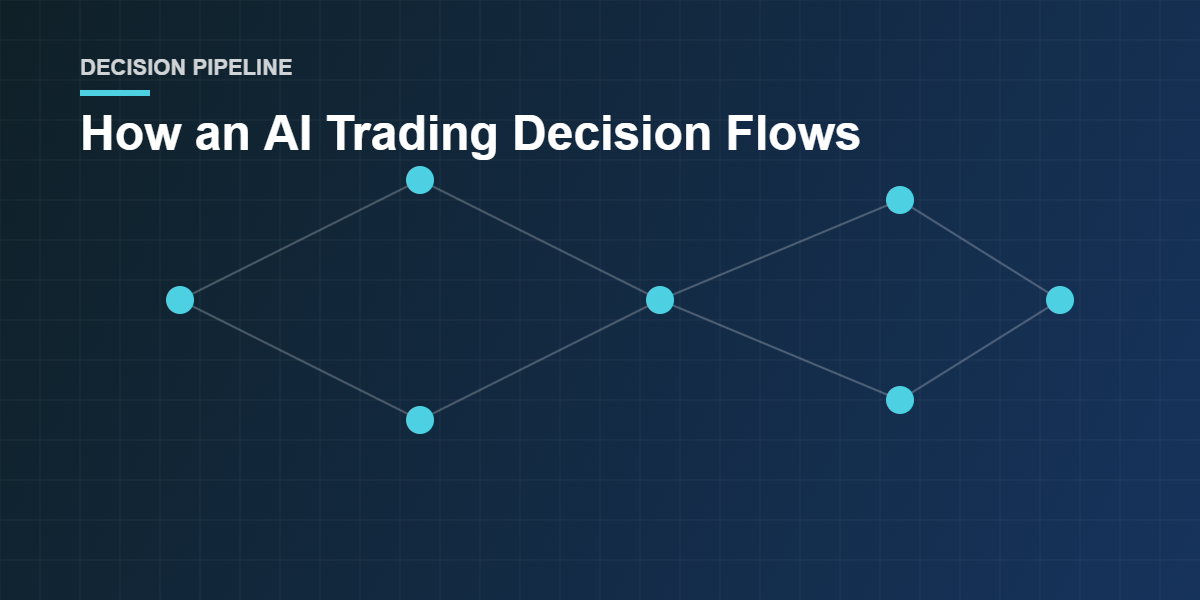
Kortfattat följer ett AI-handelsbeslut vanligtvis en kedja som denna: samla in och rensa inkommande data; omvandla dessa data till funktioner som modellen förstår; mata in dessa funktioner i den tränade modellen för att producera en sannolikhet eller poäng; skicka poängen genom riskregler som avgör positionsstorlek och om det ska handlas överhuvudtaget; och slutligen skicka en order till börsen. Modellen är bara en länk. Riskskiktet som omsluter den är ofta det som skiljer ett hållbart system från ett katastrofalt.
Automatiserade botar och exekvering
Backtestning och dess fällor
Innan strategier lanseras utvärderas de vanligtvis mot historisk data. Utvärdering är avgörande, men det är också där de flesta strategier ser mycket bättre ut än de någonsin presterar i verkligheten. Överanpassning – att finjustera en modell så noggrant till tidigare data att den fångar brus snarare än signaler – ger vackra historiska kurvor och besvikande resultat i verkligheten. Framåtblickande bias, överlevnadsbias och att ignorera avgifter och slippage blåser ytterligare upp utvärderingsresultaten.
Live-exekvering och slippage
På livemarknader är det pris du ser inte alltid det pris du får. Slippage, latens, partiella fyllningar och driftstopp på börsen urholkar den teoretiska prestandan. På tunna eller volatila kryptomarknader kan dessa exekveringsfriktioner förvandla en "lönsam" modell till en förlorande. Ett realistiskt system tar hänsyn till dessa kostnader från början snarare än att upptäcka dem efter driftsättning.
Vad AI gör bra – och vad den verkligen inte kan göra
AI är genuint stark på att bearbeta stora datamängder snabbt, upprätthålla disciplin utan känslor, övervaka många marknader samtidigt och genomföra en definierad plan konsekvent. Detta är verkliga, meningsfulla fördelar jämfört med en trött eller känslosam mänsklig handlare.
Vad AI inte kan göra är lika viktigt: den kan inte förutse verkligt exempellösa händelser, den kan inte garantera vinster – vilket är anledningen till avgöra om AI är värt att använda beror så mycket på användaren, och den kan inte omedelbart anpassa sig till en marknadsregim den aldrig har sett. När förhållandena förändras dramatiskt – en regelöverskridande chock, en börskollaps, en svart svankrasch – kan modeller som tränats på lugnare historia misslyckas allvarligt och snabbt. Ingen ärlig leverantör lovar något annat.
De verkliga riskerna som varje användare bör förstå
Flera risker förtjänar särskild uppmärksamhet. Överanpassning gör att en strategi ser tillförlitlig ut tills verkliga förhållanden avviker från träningsdata. Svart lådans opacitet betyder att vissa modeller inte kan förklara varför de handlar, vilket gör det svårt att diagnostisera fel. Marknadsregimen förändras kan ogiltigförklara en modell över en natt. Problem med datakvaliteten tyst korrumpera beslut. Och överberoende — att lita på ett system man inte förstår och låta det vara oövervakat — förvandlar ett verktyg till en belastning. Hävstångseffekt förstärker alla dessa risker.
Hur man använder AI-verktyg ansvarsfullt
Ansvarsfull användning börjar med riskhantering, inte med algoritmen. Bestäm i förväg hur mycket kapital du är villig att förlora, använd positionsstorleksbestämning och stoppregler och satsa aldrig pengar du inte har råd att förlora. Börja smått, övervaka aktivt och behandla alla AI-verktyg som en assistent snarare än en autopilot. Förstå avgifterna, uttagsvillkoren och vem som faktiskt innehar dina medel. Om du är osäker på om en leverantör är licensierad, kontrollera officiella register som FCA eller SEC. Om en plattforms strategi är helt ogenomskinlig eller om dess resultat låter för bra för att vara sanna, betrakta det som en anledning till försiktighet snarare än spänning.
Vanliga frågor
Kan AI förutsäga kryptovalutapriser korrekt?
Inget verktyg kan förutsäga priser på ett tillförlitligt sätt. AI arbetar med sannolikheter baserade på tidigare mönster, och dessa mönster kan brytas samman utan förvarning. Behandla alla påståenden om korrekta förutsägelser med stark skepsis.
Är AI-handel lämplig för nybörjare?
Nybörjare kan använda AI-verktyg, men de bör först förstå grundläggande handelskoncept och riskhantering. Att förlita sig på ett system man inte förstår är riskabelt oavsett hur sofistikerat det verkar.
Garanterar AI-handel vinster?
Nej. Alla verktyg, plattformar eller individer som lovar garanterade vinster bör behandlas som en allvarlig varningstecken. All handel medför risk för förlust.
Hur mycket pengar behöver jag för att börja?
Det finns inget universellt svar, men en förnuftig princip är att börja med ett belopp du har råd att förlora helt medan du lär dig hur ett system beter sig i verkliga förhållanden.
Vad är överanpassning och varför är det viktigt?
Överanpassning är när en modell är så noggrant anpassad till historisk data att den fångar brus istället för verkliga mönster. Den producerar imponerande backtester men presterar ofta dåligt på realtidsmarknader.
Ska jag lämna en AI-bot igång utan uppsikt?
Det är oklokt att lämna automatiserade system helt oövervakade. Marknader förändras, kopplingar slutar fungera och modeller glider. Aktiv tillsyn är fortfarande avgörande.
Är AI-handelsverktyg reglerade?
Reglerna varierar kraftigt beroende på jurisdiktion och leverantör. Innan du använder någon plattform, kontrollera dess regleringsstatus, licenser och hur den skyddar kundernas medel.
Sammanfattning
AI inom kryptohandel år 2026 är ett kraftfullt verktyg för att bearbeta data och upprätthålla disciplin, men det är inte en kristallkula och inte en genväg till garanterad avkastning. De handlare som gynnas mest är de som förstår både dess styrkor och dess begränsningar, som sveper in vilken modell som helst i solid riskhantering och som förblir engagerade snarare än att helt lämna över kontrollen. Om du utforskar AI-verktyg, ta din tid, börja smått, verifiera varje påstående och prioritera förståelse framför hype.
Relaterad läsning
- Är AI värt att använda för kryptovalutahandel?
- CryptifyAutoX Recension 2026: En ärlig, försiktig analys
För oberoende bakgrundsinformation om automatiserade och algoritmiska handelskoncept, se utbildningsresurser som Investopedias översikt över algoritmisk handel. För att kontrollera om en leverantör är reglerad, konsultera officiella register som Amerikanska SEC, den Storbritanniens finansinspektion, eller den EU:s ESMA.
Ansvarsfriskrivning: Den här artikeln är endast avsedd för utbildnings- och informationsändamål och utgör inte finansiell rådgivning, investeringsrådgivning eller handelsrådgivning. Kryptovalutahandel medför en hög risknivå, inklusive potentiell förlust av hela ditt kapital. Tidigare resultat och testade resultat garanterar inte framtida resultat. Ingenting här är en rekommendation att köpa, sälja eller använda någon specifik produkt, plattform eller strategi. Gör alltid din egen research och överväg att rådfråga en licensierad finansiell expert innan du fattar några ekonomiska beslut.

 English
  German
  Polish
  French
  German (Switzerland)
  Croatian
  Czech
Czech  Italian
  Spanish
  Swedish
  Portuguese (Portugal)
  Portuguese (Brazil)
  Japanese
  Thai
Thai  Danish