メニューを閉じる
    Facebook X(ツイッター) インスタグラム
    BBAトレーディング
    • 市場分析
    • 取引戦略
    • 商品
    • 株式市場
    • 暗号通貨
    • 外国為替
    • AIトレーディング
      • 株式取引におけるAIの仕組み
      • AI取引プラットフォームの概要
      • AIは投資に活用する価値があるのか?
    Facebook X(ツイッター) インスタグラム
    BBAトレーディング
    家»投資教育»投資ポートフォリオを分散させる方法
    投資教育

    投資ポートフォリオを分散させる方法

    Nora HayesBy ノーラ・ヘイズ2026 年 6 月 1 日コメントはまだありません8 Mins Read
    Facebook Twitter Pinterest LinkedIn Tumblr Email
    How to diversify your investment portfolio
    Share
    Facebook Twitter LinkedIn Pinterest Email

    This article is for educational purposes only and is not investment advice. Diversification reduces certain risks but cannot guarantee a profit or protect against loss.

    “Don’t put all your eggs in one basket” is among the oldest pieces of financial wisdom, and it captures the essence of diversification. Yet many investors misunderstand what genuine diversification actually requires, holding a dozen similar assets and believing they are protected when, in reality, they have simply concentrated the same risk. This guide explains what diversification truly means, how to build it across the dimensions that matter, and the common mistakes that quietly undermine it.

    The aim is to help you understand diversification as a thoughtful, ongoing process — a way to manage risk and build resilience — rather than a one-time checkbox. As always, the right approach depends on your circumstances, and professional advice can be valuable.

    What Diversification Really Means

    Diversification is the practice of spreading your investments across different assets so that the poor performance of any single holding has a limited impact on your overall portfolio. The underlying logic is that different assets do not all move in the same direction at the same time. When some fall, others may hold steady or rise, smoothing the overall journey.

    Crucially, diversification is about reducing unrewarded risk — the risk specific to a single company or sector that you are not compensated for taking. It does not eliminate market-wide risk, and it is not a strategy for maximising returns; it is a strategy for managing risk sensibly.

    Why It Reduces (But Doesn’t Eliminate) Risk

    A well-diversified portfolio reduces the chance that a single disaster — one company’s collapse, one sector’s downturn — devastates your wealth. This is one of the few genuinely reliable principles in investing, sometimes described as the only “free lunch” available (a concept explained by educators such as the U.S. SEC’s Investor.gov): a potential reduction in risk without a proportional sacrifice in expected return.

    However, it is essential to be honest about the limits. Diversification cannot protect against broad market declines, where most assets fall together, as happens in severe downturns. It reduces specific risks, not systemic ones. Expecting it to prevent all losses sets you up for disappointment; understanding what it can and cannot do leads to better decisions and to disciplined リスク管理.

    Diversifying Across Asset Classes

    Diversifying across asset classes: stocks, bonds, cash and real assets
    Diversifying across asset classes: stocks, bonds, cash and real assets

    The most important layer of diversification is across asset classes, because different classes tend to respond differently to economic conditions.

    Stocks (Equities)

    Stocks offer growth potential over the long term but come with higher volatility. They represent ownership in companies and tend to perform well during economic expansion.

    Bonds (Fixed Income)

    Bonds are generally less volatile than stocks and provide income. They often behave differently from equities, which is why a stock-and-bond mix is a classic diversification foundation, though bonds carry their own risks, including interest-rate and credit risk.

    Cash and Equivalents

    Cash provides stability and liquidity, useful for emergencies and opportunities, though its purchasing power can be eroded by inflation over time.

    Real Assets

    Real assets such as property or certain commodities can offer additional diversification and a degree of inflation protection, though they bring their own risks and liquidity considerations.

    Diversifying Across Regions and Sectors

    Beyond asset classes, geography and sector matter. Concentrating only in your home country exposes you to that economy’s specific risks; spreading across regions can reduce the impact of any single nation’s downturn, while introducing currency and political considerations.

    Similarly, spreading across sectors — technology, healthcare, energy, consumer goods, and others — prevents an over-reliance on the fortunes of one industry. An investor whose portfolio is entirely in one sector is not diversified, no matter how many individual holdings they own within it.

    Correlation and Why It Matters

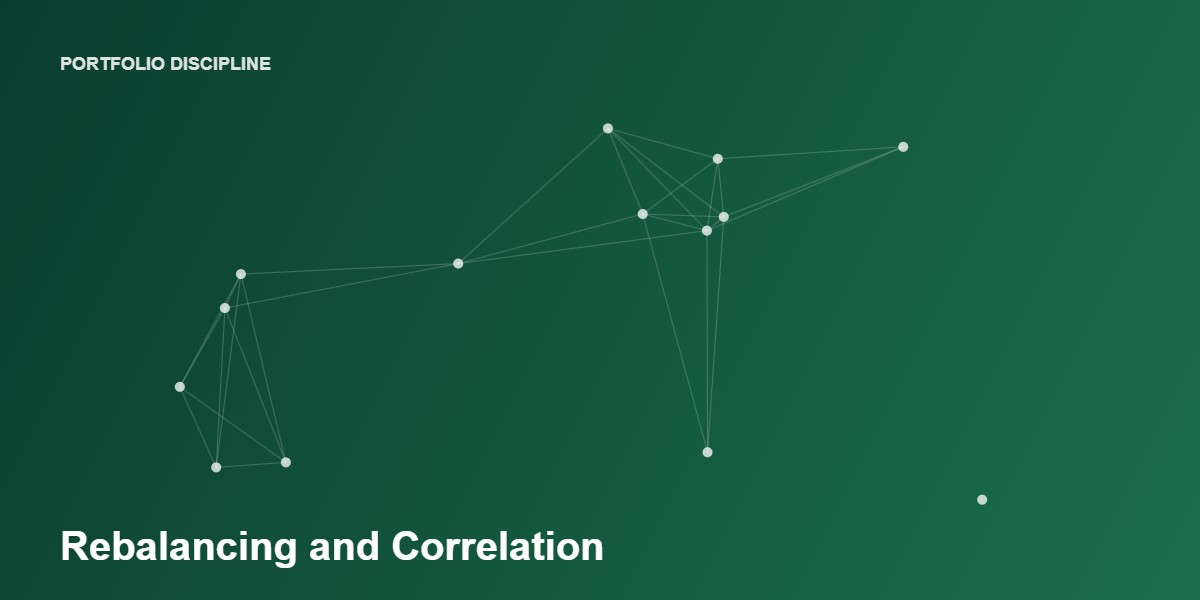
    Correlation describes how assets move in relation to one another. Two assets that always rise and fall together are highly correlated, and combining them provides little diversification benefit. Genuine diversification comes from combining assets with low or negative correlation, so that they do not all move in lockstep.

    This is why simply owning many holdings is not enough: if they are all highly correlated, you have the illusion of diversification without the substance. Thinking in terms of correlation, rather than sheer number of holdings, is the mark of a more sophisticated approach.

    Rebalancing Your Portfolio

    Rebalancing keeps your portfolio aligned with your plan
    Rebalancing keeps your portfolio aligned with your plan

    Over time, as different assets grow at different rates, your portfolio drifts from its intended allocation. A strong run in stocks, for example, can leave you more heavily weighted in equities — and more exposed to risk — than you intended. Rebalancing means periodically adjusting back toward your target allocation, typically by trimming what has grown and adding to what has lagged.

    Rebalancing enforces a disciplined “buy low, sell high” behaviour and keeps your risk level aligned with your plan. It can be done on a schedule (such as annually) or when allocations drift beyond set thresholds. Be mindful of transaction costs and tax implications when rebalancing.

    Common Diversification Mistakes

    Even well-intentioned investors fall into predictable traps.

    Over-Diversification

    Holding too many investments can dilute returns, increase complexity and costs, and make a portfolio difficult to manage — without adding meaningful risk reduction beyond a certain point. More is not always better.

    False Diversification

    Owning many holdings that are all highly correlated — for example, several funds that all track the same index or sector — creates the appearance of diversification without the reality. Always look beneath the surface at what you actually own.

    Neglecting to Rebalance

    Setting an allocation and never revisiting it allows risk to creep upward unnoticed as markets move. Diversification is not “set and forget”; it requires periodic attention.

    よくある質問

    What does it mean to diversify a portfolio?

    It means spreading investments across different assets, classes, regions, and sectors so that the poor performance of any single holding has a limited effect on your overall portfolio.

    Does diversification guarantee I won’t lose money?

    No. Diversification reduces specific risks but cannot eliminate market-wide risk or guarantee against loss. In broad downturns, most assets can fall together.

    How many investments do I need to be diversified?

    There is no magic number. What matters more is owning assets with low correlation across classes, regions, and sectors, rather than simply holding many similar ones.

    Can I diversify with index funds or ETFs?

    Broad, low-cost index funds and ETFs can provide instant diversification across many holdings. Be careful not to own several that overlap heavily, which creates false diversification.

    How often should I rebalance my portfolio?

    Common approaches include rebalancing annually or when allocations drift beyond a set threshold. Consider costs and taxes, and choose a consistent, disciplined approach.

    Is it possible to be too diversified?

    Yes. Over-diversification can dilute returns, raise costs, and add complexity without meaningfully reducing risk beyond a certain point.

    Does diversification reduce returns?

    It is designed to manage risk rather than maximise returns. It may reduce the extremes in both directions, smoothing the journey rather than chasing the highest possible gain.

    結論

    Diversification is one of the most reliable tools available to investors — not because it guarantees gains, but because it manages risk intelligently. True diversification spreads exposure across asset classes, regions, and sectors, pays attention to correlation rather than sheer numbers, and is maintained through periodic rebalancing. Equally important is understanding its limits: it reduces specific risk, not market-wide risk.

    If you are reviewing your own portfolio, consider whether your holdings are genuinely varied or merely numerous, and whether your allocation still reflects your goals and risk tolerance. A thoughtful, well-diversified plan — ideally developed with professional guidance — is a sound foundation for long-term investing.

    関連文献

    • Risk Management in Trading: A Practical Guide
    • 長期投資 vs. 短期売買:どちらのアプローチがあなたに合っているか?
    • Investor.gov: Diversifying Your Portfolio
    • Investopedia: Diversification

    免責事項: This article is provided for educational and informational purposes only and does not constitute investment, financial, legal, or tax advice, nor a recommendation to buy or sell any security or to adopt any particular strategy. Diversification does not guarantee a profit or protect against loss, particularly in declining markets. All investing involves risk, including the possible loss of capital. Past performance is not indicative of future results. Your individual circumstances differ, and you should conduct your own research and consult a licensed, independent financial professional before making any investment decision.


    asset allocation diversification investing basics portfolio management rebalancing
    Share. Facebook Twitter Pinterest LinkedIn Tumblr Email
    ノーラ・ヘイズ

    Nora Hayes is a contributor at BBA Trading who specializes in investing education, risk management, and trading strategies. She writes practical guides on position sizing, portfolio construction, and disciplined trading, with a focus on helping readers build sustainable habits.

    Related Posts

    外国為替取引の仕組み:初心者向けガイド

    2026 年 6 月 1 日

    長期投資 vs. 短期売買:どちらのアプローチがあなたに合っているか?

    2026 年 6 月 1 日

    トレーディングにおけるリスク管理:2026年に向けた実践ガイド

    2026 年 6 月 1 日
    Leave A Reply Cancel Reply

    Facebook X(ツイッター) インスタグラム Pinterest
    • プライバシーポリシー
    • BBAトレーディングについて
    • お問い合わせ
    • リスクに関する免責事項
    © 2026

    上記に入力してEnterを押すと検索できます。キャンセルするにはEscを押してください。.

    We've detected you might be speaking a different language. Do you want to change to:
    言語をEnglishに変更 English
    言語をEnglishに変更 English
    言語をGermanに変更 German
    言語をPolishに変更 Polish
    言語をFrenchに変更 French
    言語をGermanに変更 German (Switzerland)
    言語をCroatianに変更 Croatian
    言語をCzechに変更 Czech
    言語をItalianに変更 Italian
    言語をSpanishに変更 Spanish
    言語をSwedishに変更 Swedish
    言語をPortugueseに変更 Portuguese (Portugal)
    言語をPortugueseに変更 Portuguese (Brazil)
    Japanese
    言語をThaiに変更 Thai
    言語をDanishに変更 Danish
    Change Language
    Close and do not switch language
    Japanese
    English German Polish French German (Switzerland) Croatian Czech Italian Spanish Swedish Portuguese (Portugal) Portuguese (Brazil) Thai Danish