
Tempo estimado de leitura: aproximadamente 14 minutos
A inteligência artificial deixou de ser apenas um termo de marketing para se tornar parte integrante da forma como muitas pessoas abordam os mercados de criptomoedas. Mas a lacuna entre o que a IA faz e o que ela representa é ainda grande. na verdade faz e o que as pessoas imaginar O mercado continua enorme. Este guia explica, em linguagem simples, como a IA funciona na negociação de criptomoedas em 2026 — os mecanismos reais, as limitações e os riscos que todo investidor deve compreender antes de confiar seu dinheiro a um algoritmo.
O que realmente significa "negociação com IA" (e o que não significa)
Quando as pessoas falam em "negociação com IA", geralmente imaginam um sistema que prevê o futuro. Na realidade, a IA na negociação é um conjunto de técnicas estatísticas e de aprendizado de máquina que encontram padrões em dados históricos e em tempo real, e então agem com base em probabilidades. Ela não conhece o futuro e não pode eliminar a incerteza. Uma descrição mais precisa seria dizer que a IA é uma ferramenta muito rápida e incansável de reconhecimento de padrões que segue regras — algumas predefinidas, outras aprendidas a partir de dados.
Essa distinção é importante. Um sistema que "prevê probabilidades" se comporta de maneira muito diferente de um que "sabe o que vai acontecer". Tratar o primeiro como se fosse o segundo é o erro mais comum — e mais caro — na negociação automatizada.
Os fundamentos da IA na negociação de criptomoedas
Modelos de Aprendizado de Máquina
No cerne da maioria dos sistemas de negociação com IA estão modelos de aprendizado de máquina treinados com dados históricos de preços, informações do livro de ofertas e outros sinais. As abordagens comuns incluem aprendizado supervisionado (prever se o preço subirá ou cairá em um determinado período), aprendizado por reforço (um agente que aprende uma política de negociação por meio de tentativa e erro em simulação) e modelos de séries temporais projetados para dados sequenciais. Cada um apresenta vantagens e desvantagens em termos de precisão, estabilidade e facilidade com que falha quando as condições de mercado mudam.
Entradas de dados e sinais
Um modelo só é tão bom quanto os seus dados. As entradas típicas incluem preço e volume em diferentes corretoras, profundidade do livro de ofertas, medidas de volatilidade, taxas de financiamento em mercados de derivativos e métricas on-chain, como fluxos de carteiras e saldos em corretoras. A qualidade, a latência e a limpeza desses dados determinam diretamente a utilidade do resultado do modelo. "Lixo entra, lixo sai" não é um clichê no mercado financeiro — é uma realidade operacional diária.
Análise de sentimento e on-chain
Muitos sistemas modernos incorporam processamento de linguagem natural para avaliar o sentimento do mercado a partir de notícias, mídias sociais e atividades de desenvolvedores. A análise on-chain adiciona outra dimensão ao ler os dados da blockchain diretamente. Ambas podem ser valiosas, mas ambas são ruidosas: o sentimento pode ser manipulado e os sinais on-chain são frequentemente ambíguos. É melhor considerá-los como contexto complementar, e não como gatilhos isolados.
Como um sistema de negociação com IA toma decisões
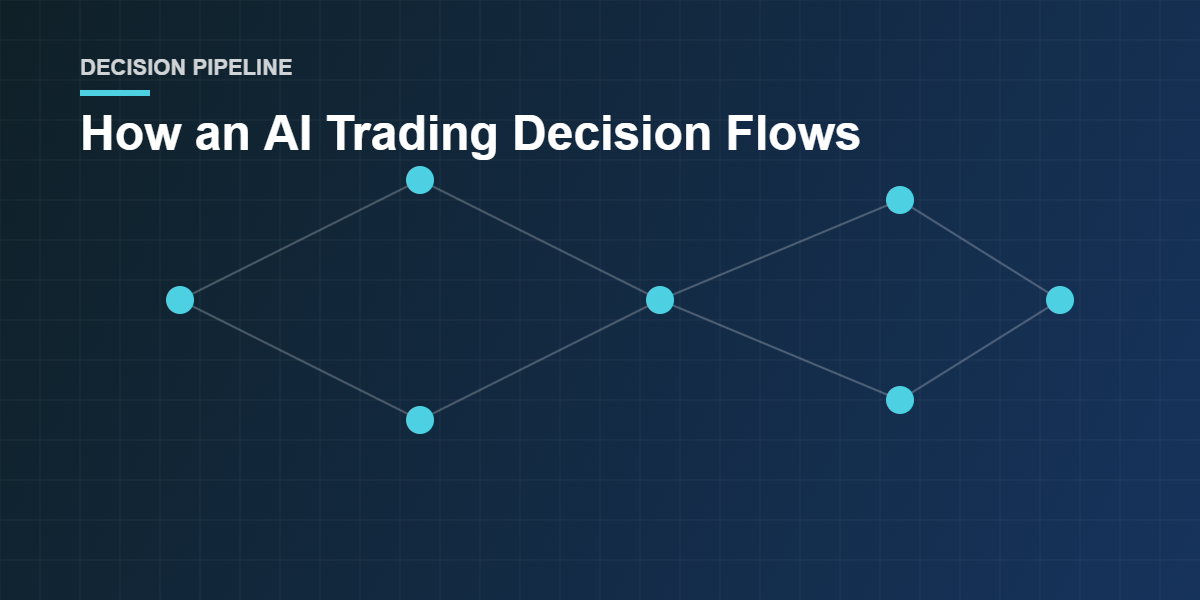
Em sua essência, uma decisão de negociação com IA geralmente segue uma cadeia como esta: coletar e limpar os dados recebidos; transformar esses dados em características que o modelo entenda; alimentar o modelo treinado com essas características para produzir uma probabilidade ou pontuação; submeter essa pontuação a regras de risco que decidem o tamanho da posição e se a negociação deve ser realizada; e, finalmente, enviar uma ordem à bolsa. O modelo é apenas um elo. A camada de risco que o envolve é frequentemente o que separa um sistema sustentável de um catastrófico.
Bots automatizados e execução
Backtesting e suas armadilhas
Antes de entrarem em operação, as estratégias geralmente são testadas retroativamente com dados históricos. O teste retroativo é essencial, mas é também onde a maioria das estratégias apresenta resultados muito melhores do que os reais. O sobreajuste — ajustar um modelo tão precisamente aos dados passados que ele captura ruído em vez de sinal — produz curvas históricas excelentes e resultados decepcionantes em operação. O viés de previsão, o viés de sobrevivência e a negligência de taxas e slippage inflacionam ainda mais os resultados do teste retroativo.
Execução ao vivo e deslizamento
Em mercados reais, o preço que você vê nem sempre é o preço que você obtém. Derrapagem, latência, execuções parciais e tempo de inatividade da exchange corroem o desempenho teórico. Em mercados de criptomoedas com baixo volume ou volatilidade, esses atritos de execução podem transformar um modelo "lucrativo" em um modelo deficitário. Um sistema realista leva em conta esses custos desde o início, em vez de descobri-los após a implementação.
O que a IA faz bem — e o que ela realmente não consegue fazer.
A IA é realmente muito forte no processamento rápido de grandes volumes de dados, na aplicação de disciplina sem emoção, no monitoramento simultâneo de diversos mercados e na execução consistente de um plano definido. Essas são vantagens reais e significativas em relação a um operador humano cansado ou influenciado por emoções.
O que a IA não consegue fazer é igualmente importante: ela não consegue prever eventos verdadeiramente sem precedentes, não consegue garantir lucros — e é por isso que Decidir se vale a pena usar IA Depende muito do usuário e não consegue se adaptar instantaneamente a um regime de mercado que nunca viu. Quando as condições mudam drasticamente — um choque regulatório, o colapso de uma bolsa, um evento imprevisível —, os modelos treinados com base em dados históricos mais estáveis podem falhar de forma grave e rápida. Nenhum provedor honesto promete o contrário.
Os riscos reais que todo usuário deve entender
Diversos riscos merecem atenção explícita. Sobreajuste Faz com que uma estratégia pareça confiável até que as condições reais se desviem dos dados de treinamento. Opacidade da caixa preta significa que alguns modelos não conseguem explicar por que Eles negociam, o que dificulta o diagnóstico de falhas. Mudanças no regime de mercado pode invalidar um modelo da noite para o dia. problemas de qualidade de dados decisões silenciosamente corruptas. E dependência excessiva Confiar em um sistema que você não entende e deixá-lo sem monitoramento transforma uma ferramenta em um passivo. A alavancagem amplifica cada um desses riscos.
Como usar ferramentas de IA de forma responsável
O uso responsável começa com a gestão de riscos, não com o algoritmo. Decida antecipadamente quanto capital está disposto a perder, utilize dimensionamento de posição e regras de stop loss e nunca invista dinheiro que não possa perder. Comece com pouco, monitore ativamente e trate qualquer ferramenta de IA como um assistente, e não como um piloto automático. Compreenda as taxas, os termos de saque e quem realmente detém seus fundos. Se tiver dúvidas sobre a licença de um provedor, consulte registros oficiais, como o [inserir nome do órgão regulador]. FCA ou SEC. Se a estratégia de uma plataforma for completamente opaca ou se os resultados parecerem bons demais para ser verdade, considere isso um motivo para cautela, e não para entusiasmo.
Perguntas frequentes
Será que a IA consegue prever com precisão os preços das criptomoedas?
Nenhuma ferramenta consegue prever preços com precisão. A IA trabalha com probabilidades baseadas em padrões passados, e esses padrões podem se desfazer sem aviso prévio. Trate qualquer alegação de previsão precisa com muito ceticismo.
A negociação com IA é adequada para iniciantes?
Iniciantes podem usar ferramentas de IA, mas primeiro devem compreender os conceitos básicos de negociação e gestão de riscos. Confiar em um sistema que você não entende é arriscado, independentemente de quão sofisticado ele pareça.
A negociação com IA garante lucros?
Não. Qualquer ferramenta, plataforma ou indivíduo que prometa lucros garantidos deve ser encarado como um sinal de alerta sério. Todas as negociações envolvem risco de perda.
De quanto dinheiro preciso para começar?
Não existe uma resposta universal, mas um princípio sensato é começar com um valor que você possa se dar ao luxo de perder completamente enquanto aprende como um sistema se comporta em condições reais.
O que é sobreajuste e por que isso importa?
O sobreajuste ocorre quando um modelo é ajustado tão precisamente aos dados históricos que acaba capturando ruído em vez de padrões genuínos. Ele produz resultados impressionantes em testes retrospectivos, mas geralmente apresenta desempenho ruim em mercados reais.
Devo deixar um bot de IA funcionando sem supervisão?
É imprudente deixar sistemas automatizados completamente sem monitoramento. Os mercados mudam, as conexões falham e os modelos se desviam. A supervisão ativa continua sendo essencial.
As ferramentas de negociação com IA são regulamentadas?
A regulamentação varia bastante de acordo com a jurisdição e o provedor. Antes de usar qualquer plataforma, verifique seu status regulatório, licenças e como ela protege os fundos dos clientes.
Resumo
A inteligência artificial (IA) no mercado de criptomoedas em 2026 é uma ferramenta poderosa para processar dados e impor disciplina, mas não é uma bola de cristal nem um atalho para retornos garantidos. Os traders que mais se beneficiam são aqueles que compreendem tanto seus pontos fortes quanto suas limitações, que incorporam qualquer modelo a uma gestão de risco sólida e que permanecem envolvidos em vez de entregar o controle completamente. Se você está explorando ferramentas de IA, não tenha pressa, comece com pouco, verifique cada afirmação e priorize o entendimento em vez da empolgação.
Leituras relacionadas
- Vale a pena usar IA para negociação de criptomoedas?
- Análise do CryptifyAutoX 2026: Uma Análise Honesta e Cautelosa
Para obter informações independentes sobre conceitos de negociação automatizada e algorítmica, consulte recursos educacionais como... Visão geral da Investopedia sobre negociação algorítmica. Para verificar se um prestador de serviços é regulamentado, consulte registros oficiais, como o SEC dos EUA, o FCA do Reino Unido, ou o ESMA da UE.
Isenção de responsabilidade: Este artigo tem fins meramente educativos e informativos e não constitui aconselhamento financeiro, de investimento ou de negociação. A negociação de criptomoedas envolve um alto nível de risco, incluindo a potencial perda de todo o seu capital. O desempenho passado e os resultados de testes retroativos não garantem resultados futuros. Nada aqui apresentado constitui uma recomendação para comprar, vender ou utilizar qualquer produto, plataforma ou estratégia específica. Sempre faça a sua própria pesquisa e considere consultar um profissional financeiro licenciado antes de tomar qualquer decisão financeira.

 English
  German
  Polish
  French
  German (Switzerland)
  Croatian
  Czech
Czech  Italian
  Spanish
  Swedish
  Portuguese (Portugal)
  Portuguese (Brazil)
  Japanese
  Thai
Thai  Danish