
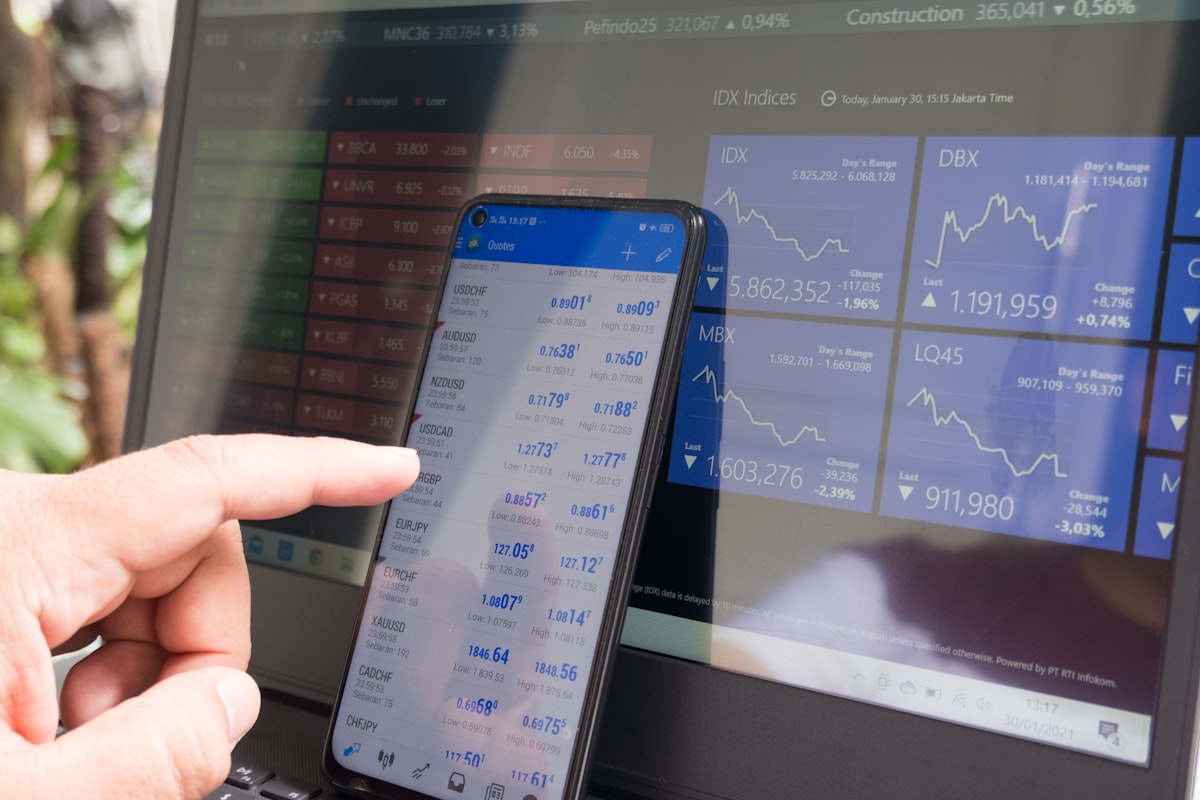
Structure actuelle du marché
La paire EUR/USD a été l'un des instruments les plus activement négociés sur les marchés des changes mondiaux au cours du premier trimestre 2026, avec un volume d'échanges quotidien moyen d'environ 1,4 milliard de yuans selon les données de règlement CLS. La paire s'échange actuellement à 1,0920, après avoir établi un canal ascendant bien défini depuis son plus bas de janvier à 1,0640. Comprendre la structure technique en jeu est essentiel pour les traders qui cherchent à identifier les configurations à forte probabilité dans les semaines à venir.
Le contexte macroéconomique plus large de l'EUR/USD est marqué par la convergence des politiques de la Réserve fédérale américaine et de la Banque centrale européenne. La Fed maintenant ses taux à 3,75% et la BCE à 3,25%, l'écart de 50 points de base est le plus faible depuis 2021. Cette convergence a été un facteur déterminant de la vigueur de l'euro, l'avantage lié au portage d'actifs libellés en dollars continuant de s'amenuiser. Pour plus d'informations, voir : Réserve fédérale.
Analyse graphique hebdomadaire
Sur une échelle de temps hebdomadaire, l'EUR/USD se négocie au-dessus de ses moyennes mobiles à 50 et 200 semaines pour la première fois depuis mi-2024. La moyenne mobile à 50 semaines, actuellement à 1,0780, a franchi à la hausse la moyenne mobile à 200 semaines à 1,0720 en mars, formant un croisement haussier que les analystes techniques considèrent comme un signal structurel positif.
L'indicateur RSI(14) hebdomadaire s'établit à 58, signalant une dynamique positive sans pour autant indiquer une situation de surachat. Historiquement, les valeurs comprises entre 55 et 65 pour le RSI hebdomadaire ont été associées à des tendances haussières durables sur la paire EUR/USD, contrairement aux valeurs supérieures à 70 qui précèdent souvent des corrections.
L'histogramme hebdomadaire du MACD est positif depuis huit semaines consécutives, la ligne de signal conservant une trajectoire ascendante nette. Cela suggère que la tendance à moyen terme reste fermement haussière et que tout repli à court terme doit être considéré comme une opportunité d'achat plutôt que comme un signe d'inversion de tendance.
L'analyse du nuage Ichimoku sur le graphique hebdomadaire montre que le cours évolue au-dessus du nuage, le Tenkan-sen (1,0870) étant supérieur au Kijun-sen (1,0810). Le nuage futur est également haussier, confirmant la tendance positive observée sur plusieurs indicateurs techniques japonais.
Figures graphiques journalières et niveaux clés
Le graphique journalier révèle une succession de sommets et de creux ascendants qui définissent le canal ascendant actuel. La ligne de support du canal relie le creux du 15 janvier (1,0640) à celui du 3 mars (1,0750) et se situe actuellement aux alentours de 1,0830. La ligne de résistance du canal passe par le sommet du 14 février (1,0920) et celui du 28 mars (1,0980), et se situe actuellement près de 1,1000.
Les principaux niveaux de support horizontaux sur le graphique journalier comprennent :
- 1.0870 — Le précédent sommet du 15 mars a été testé à deux reprises comme support.
- 1.0830 — Support du canal ascendant coïncidant avec la moyenne mobile à 50 jours
- 1.0780 — Niveau structurel majeur ayant servi de résistance tout au long du mois de février
- 1.0720 — Moyenne mobile sur 200 jours et niveau psychologique majeur
Les principaux niveaux de résistance horizontale comprennent :
- 1.0950 — Le plus haut de mars a été rejeté par une bougie d'avalement baissière.
- 1.1000 — résistance du niveau psychologique majeur et du canal ascendant
- 1.1080 — Le sommet de septembre 2024 représente la prochaine résistance structurelle majeure.
Configurations de trading intraday
Pour les traders intraday opérant sur les unités de temps de 4 heures et 1 heure, plusieurs configurations à forte probabilité se dessinent. L'ouverture de la séance londonienne (7h00 GMT) offre systématiquement la liquidité la plus élevée et les mouvements de prix les plus fiables pour la paire EUR/USD, ce qui en fait la fenêtre de trading optimale pour les prises de position directionnelles.
Configuration 1 : Rebond de support de canal
Lors d'un repli, lorsque le prix approche la zone 1,0830-1,0850, recherchez des figures de chandelier haussières (étoile du matin, avalement haussier ou marteau) sur l'unité de temps horaire pour confirmer le support. Une entrée en position à la clôture du chandelier de confirmation, avec un stop loss placé 30 pips sous le plus bas du chandelier de retournement et un objectif à 1,0950, offre un ratio risque/rendement de 2:1.
Configuration 2 : Interruption et nouveau test de la version 1.0950
Si le cours franchit nettement la résistance à la hausse (1,0950) avec un volume important, attendez un nouveau test de cette résistance, qui servira de support. Le signal de confirmation est une bougie de rejet haussière (longue mèche inférieure) au niveau de 1,0950 sur le graphique en 4 heures. Visez le niveau psychologique de 1,1000 avec un stop loss sous 1,0920.
Configuration 3 : Atténuation de la plage à 1,1000
Le niveau de 1,1000 devrait engendrer une forte pression à la vente dès le premier test. Si le cours s'approche de ce niveau avec un RSI prolongé supérieur à 70 sur le graphique en 4 heures, une configuration baissière en chandelier japonais (étoile du soir, avalement baissier) offre une opportunité d'entrée à la vente à fort potentiel, avec un objectif de retour à 1,0920 et un stop loss serré au-dessus de 1,1030.
Catalyseurs fondamentaux à surveiller
Plusieurs publications économiques à fort impact au cours des deux prochaines semaines pourraient potentiellement annuler les schémas techniques et déclencher des mouvements impulsifs sur la paire EUR/USD :
- 14 avril — Production industrielle de la zone euro (prévisionnelle +0,31 TP3T m/m)
- 17 avril — Décision de la BCE concernant les taux d'intérêt (maintien attendu à 3,25%)
- 17 avril — Ventes au détail aux États-Unis (prévisions : +0,4% m/m)
- 22 avril — Indice PMI flash de la zone euro (composite attendu : 51,2)
- 22 avril — Indice PMI flash américain (composite prévu à 52,0)
La décision de la BCE le 17 avril constitue l'événement à risque le plus important. Bien qu'aucun changement de taux ne soit attendu, la déclaration et la conférence de presse apporteront des éclaircissements sur l'évaluation par la BCE de la croissance et de l'inflation dans la zone euro. Toute surprise défavorable à la politique monétaire pourrait propulser la paire EUR/USD nettement au-dessus de la résistance de 1,0950, tandis qu'une orientation plus accommodante pourrait entraîner un nouveau test de la zone de support de 1,0830. Pour plus d'informations, voir : Bureau des statistiques du travail des États-Unis.
Gestion des risques pour les traders Forex
Le dimensionnement des positions sur la paire EUR/USD doit tenir compte de l'amplitude quotidienne moyenne, qui s'est établie à environ 70 pips au cours du mois écoulé. En utilisant un modèle de risque limitant l'exposition à 1-2% de capital par transaction, un trader disposant d'un compte de $50 000 devrait risquer entre $500 et 1 000 par transaction. Avec un stop loss classique de 30 à 40 pips, cela correspond à une taille de position d'environ 1,5 à 2,5 lots standard.
L'analyse de corrélation est essentielle à la gestion des risques au niveau du portefeuille. La paire EUR/USD présente actuellement une corrélation positive de 0,75 avec la paire GBP/USD et une corrélation négative de -0,82 avec la paire USD/CHF. Détenir simultanément des positions sur des paires fortement corrélées double de fait l'exposition aux fluctuations du dollar, un risque qu'il convient de gérer explicitement par un ajustement de la taille des positions.
Le sourire de volatilité des options EUR/USD est actuellement orienté vers les puts (protection contre la baisse), les Risk Reverses à 25 deltas se négociant à -0,3 point de volatilité. Cela indique que le marché des options attribue une probabilité légèrement plus élevée aux mouvements baissiers, ce qui contraste avec le contexte technique haussier. Cette divergence entre l'analyse technique au comptant et le positionnement sur les options mérite d'être surveillée, car elle pourrait constituer un indicateur avancé des changements de sentiment.
Lectures complémentaires
- Masterclass Swing Trading : Comment identifier et exécuter des configurations à forte probabilité
- Comprendre les types d'ordres : au marché, à cours limité, stop et au-delà
- Interprétation des figures de chandeliers : un guide pratique
Foire aux questions
Quel est l'objectif principal de ce guide ?
Ce guide explique l'analyse technique de la paire EUR/USD de manière équilibrée et pédagogique, en abordant à la fois les avantages potentiels et les principaux risques afin que vous puissiez prendre des décisions éclairées.
Que dois-je savoir sur la structure actuelle du marché ?
Cette section décrit la structure actuelle du marché. L'essentiel est de comprendre les mécanismes sous-jacents et les risques associés avant d'agir, et de dimensionner son exposition avec prudence.
Que dois-je savoir sur l'analyse graphique hebdomadaire ?
Cette section présente l'analyse graphique hebdomadaire. L'essentiel est de comprendre les mécanismes sous-jacents et les risques associés avant d'agir, et de dimensionner son exposition avec prudence.
Que dois-je savoir sur les figures graphiques journalières et les niveaux clés ?
Cette section analyse les figures graphiques journalières et les niveaux clés. L'essentiel est de bien comprendre les mécanismes sous-jacents et les risques associés avant d'agir, et de dimensionner son exposition avec prudence.
Cet article constitue-t-il un conseil financier ?
Non. Ce contenu est fourni à titre informatif et éducatif uniquement et ne constitue en aucun cas un conseil financier, d'investissement ou de trading. Faites toujours vos propres recherches et envisagez de consulter un professionnel agréé.
Comment puis-je en apprendre davantage sur ce sujet ?
Vous pouvez explorer les articles connexes mentionnés dans cet article, consulter les sources faisant autorité citées et continuer à développer progressivement vos connaissances avant d'investir un capital réel.

 English
  German
  Polish
  French
  German (Switzerland)
  Croatian
  Czech
Czech  Italian
  Spanish
  Swedish
  Portuguese (Portugal)
  Portuguese (Brazil)
  Japanese
  Thai
Thai  Danish